In vivo experimentation remains a decisive stage of translational research: it is at the scale of the whole organism that the efficacy, safety and physiological relevance of a therapeutic hypothesis are verified. But the phrase “animal model” covers an extraordinarily diverse reality, from the standard mouse knockout to models carrying human proteins, by way of patient-derived xenografts and zebrafish. Each answers different questions, with its own constraints. This article offers an overview of these models: the ethical and regulatory framework governing them, the transformation that framework is currently undergoing with the rise of alternative methods, the main families of model available, and the criteria that guide their choice. It dwells at greater length on what is today one of the field’s most accomplished sophistications: humanization.
Why in vivo remains indispensable
Cell models have advanced considerably — primary cultures, organoids, induced pluripotent stem cells, microfluidic systems. They allow mechanisms to be dissected with a precision and reproducibility inaccessible in animals, and molecules to be screened at scale. But they share a structural limit: they isolate a biological compartment from the organism that contains it.
Yet some questions exist only at the scale of the whole organism. The pharmacokinetics of a molecule (its absorption, distribution, metabolism, elimination) engages the liver, the kidney, the circulation, the intestinal barrier. Systemic toxicity is revealed only in an integrated system. Interactions between organs, a coordinated immune response, complex phenotypes such as a bleed, the growth of a tumor in its native microenvironment or epileptic behavior cannot be reconstituted in a culture dish. In vivo therefore does not replace in vitro: it extends it, bringing the level of integration that cell work lacks.
A strict ethical and regulatory framework
Recourse to animals in research is the object of dense legal regulation, and it is worth recalling which, since it concretely structures how studies are designed.
The founding principle is the 3Rs rule (Replace, Reduce, Refine), formulated as early as 1959 by the researchers Russell and Burch. It requires animal experimentation to be replaced by other methods whenever possible; failing that, the number of animals used to be reduced; and, in every case, procedures to be refined — that is, methodologies optimized to lessen pain and distress while maintaining a high standard of scientific results. This last point is sometimes perceived as a constraint external to science: the reverse is true. An animal in a state of stress or suffering produces physiologically biased data. Refinement is not only a moral requirement, it is a condition of scientific quality.
In Europe, this principle is enshrined in Directive 2010/63/EU [2] of 22 September 2010 on the protection of animals used for scientific purposes, which revises Directive 86/609/EEC and has applied in France since 1 January 2013. Its transposition into French law rests on decree no. 2013-118 of 1 February 2013 and five implementing orders, codified in articles R214-87 to R214-137 of the rural and maritime fishing code — the 3Rs rule appearing in article R214-105. The directive has since been amended by delegated directive (EU) 2024/1262 of 13 March 2024.
In practice, this edifice translates into prior control at several levels. Any project using animals must obtain authorization from the ministry responsible for research, granted for a maximum of five years and conditional on prior ethical evaluation by an accredited animal experimentation ethics committee. The establishments themselves must be accredited and are subject to regular inspection; they have dedicated animal welfare structures. The general principle remains that research on animals is lawful only if it is of strict necessity — in other words, every study must justify that no alternative could have answered the question posed.
A shifting landscape: alternative methods
That last point, the absence of an alternative, calls for a clarification: what counts as an admissible alternative is moving fast. The “Replace” of the 3Rs, long stated as a long-term principle, has become an active regulatory trajectory on both sides of the Atlantic.
In the United States, the Food and Drug Administration announced in April 2025 its intention to phase out the requirement for animal testing for monoclonal antibodies, and then for other drugs, drawing on what are termed New Approach Methodologies (NAMs) [4]: computational toxicity models based on artificial intelligence, cell lines, organoids and organ-on-chip systems. A five-year roadmap accompanies the announcement, with the objective of moving animal studies from the status of norm to that of exception in safety assessment, and recommendations framing the use of NAMs in regulatory dossiers have followed.
In Europe, the movement took official form on 1 June 2026, with the Commission’s adoption of a roadmap [3] toward phasing out animal testing for chemical safety assessments. It covers a broad range of legislative areas, including pharmaceuticals, and sets out more than thirty recommendations. It is accompanied by an investment effort in non-animal approaches (artificial intelligence, human data, virtual human twins, computational modeling, in vitro technologies), including an envelope of 49 million euros under the Horizon Europe 2026-2027 work programme, together with a public monitoring mechanism. The Commission itself acknowledges that replacement remains difficult and that progress is overall too slow.
These texts must nevertheless be read for what they are, since a confusion readily sets in. They bear on the regulatory assessment of safety (toxicology, authorization dossiers), a domain where animal models have often proved poorly predictive, and not on fundamental and translational research. Modeling a disease, validating a target, understanding a pathophysiological mechanism at the scale of the organism remain questions for which no complete alternative exists today. The trajectory is therefore not the disappearance of in vivo work, but its narrowing onto what it alone can bring: fewer animals, on better-targeted questions, with more relevant models — of which humanized models are precisely an example — and all the more thorough in vitro and in silico work upstream. The two approaches complement rather than oppose one another, and it is that articulation that today defines a well-designed preclinical project.
An overview of the main model types
Genetically modified models
The core of the preclinical arsenal remains the genetically modified mouse. The constitutive knockout inactivates a gene throughout the organism from development onward: simple and informative, but sometimes impracticable if loss of the gene is lethal at the embryonic stage. The conditional, tissue-specific knockout, generally obtained with the Cre-lox system, circumvents this difficulty by inactivating the gene only in a given tissue, or at a chosen moment. The knock-in, by contrast, introduces a precise sequence — a point mutation reproducing that of a patient, for instance. Transgenic models add a gene, and double knockouts allow the interaction of two genes to be studied, or the functional redundancy frequent in protein families to be circumvented.
Disease models
A second family reproduces a pathology rather than interrogating a gene. Some models are genetic — the mdx mouse for Duchenne dystrophy, hemophilia models in hematology. Others are induced: a high-fat diet for obesity and metabolic syndrome, lithium-pilocarpine treatment to trigger status epilepticus and study epileptogenesis [6]. Induction has the advantage of controlling the moment of onset, and therefore of observing the disease as it takes hold.
Oncology models: xenografts and orthotopic models
In cancer research, patient-derived xenografts (PDX) consist of implanting into an immunodeficient mouse a tumor fragment taken from a patient, which preserves part of the architecture and heterogeneity of the original tumor. Orthotopic models go further by implanting the tumor in the organ it came from rather than subcutaneously: the microenvironment is then much closer to clinical reality, at the cost of heavier surgery and imaging-based monitoring.
Beyond the mouse
Other species answer specific needs. The zebrafish, transparent at the larval stage, lends itself to in vivo imaging and optogenetics, with numbers compatible with screening. The non-human primate, whose use is particularly tightly regulated, remains irreplaceable for certain questions in integrative neuroscience.
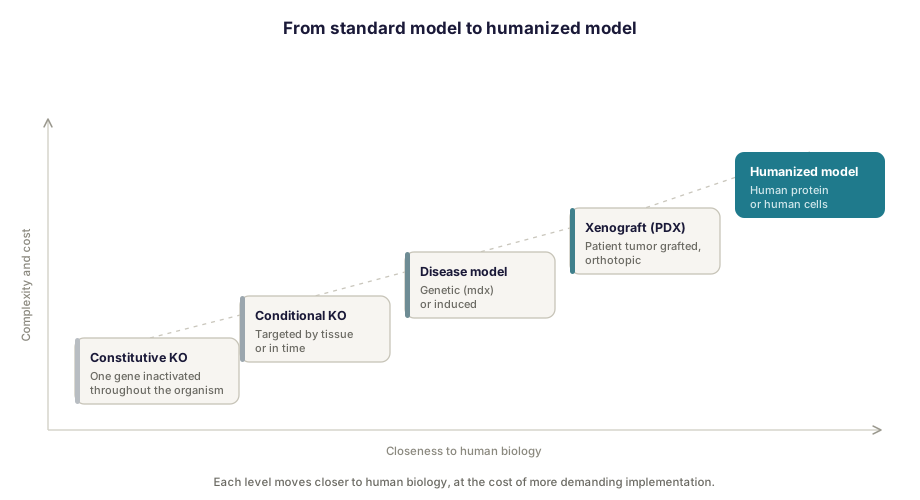
Humanization: making the human protein expressed
One obstacle runs through all preclinical research: differences between species. The mouse is not a small human. Its proteins differ from ours in sequence, sometimes in function, often in their molecular partners. That divergence becomes blocking as soon as one wishes to test a therapeutic candidate designed for humans: an antibody directed against a human protein may simply fail to recognize its murine equivalent, and the animal model, relevant though it is for the disease, becomes unusable for evaluating the molecule.
Humanization answers that obstacle directly. The principle consists of replacing, in the animal, the murine gene with its human equivalent, so that the organism expresses the human protein in its physiological context. The therapeutic candidate then finds its target again, and the preclinical experiment becomes predictive once more.
A distinction is called for here, since two very different realities hide under the same term. Genetically humanized mice carry one or more human genes in place of the corresponding murine genes: they express the human protein constitutively, in the cells that naturally express it. Immunologically humanized mice are something else entirely: immunodeficient animals into which human immune cells or tissues are grafted, in order to reconstitute a functional human immune system — an approach that has become central in immuno-oncology for evaluating human-specific immunotherapies [1]. The two strategies aim at the same goal of human relevance, but they do not answer the same questions and are not built in the same way.
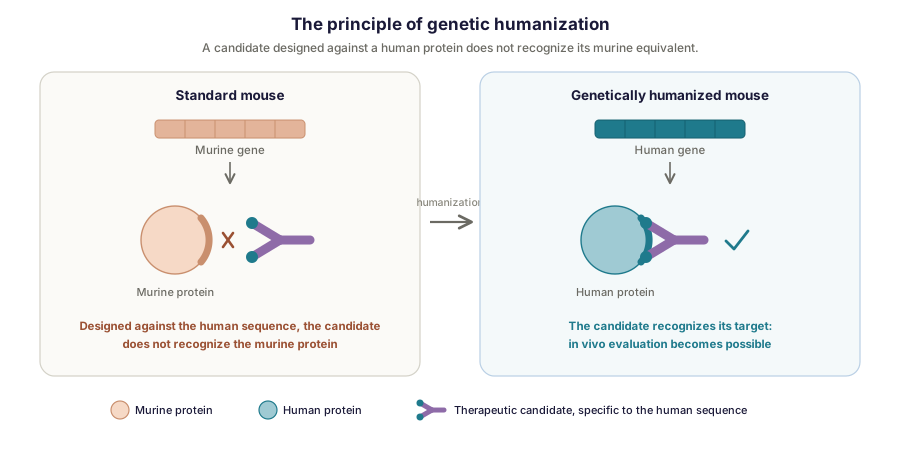
A concrete case: a fully humanized model of von Willebrand disease
Work Inovarion contributed to illustrates this whole approach, from identifying the obstacle to demonstrating a use.
The starting point is a finding of deadlock: in von Willebrand disease, the most common inherited bleeding disorder, therapeutic innovation has been at a standstill for decades, and the available mouse models are unsuited to preclinical studies precisely because of differences between species [5]. Under those conditions, testing new approaches in vivo was impossible.
The response consisted of generating mice selectively expressing human von Willebrand factor (VWF) and human glycoprotein GPIbα. Characterizing the model held a useful surprise: the animals express a low VWF level (12%) and reduced factor VIII (40%), with a normal multimeric profile and a normal activity-to-antigen ratio — a picture corresponding not to a healthy humanized model, but to type 1 von Willebrand disease, the most common form since it accounts for 70 to 80% of cases. The model was therefore repositioned as such. Its thorough characterization confirmed the expected traits: reduced platelet adhesion and thrombus formation in vitro, a moderate bleeding phenotype in vivo, corrected by administering recombinant VWF or by histamine-induced release of endothelial VWF.
The platform then served what it had been designed for: evaluating a candidate molecule. A bispecific single-domain antibody bridging VWF to albumin was tested; a single subcutaneous administration sufficed to double the VWF level durably for ten days and to normalize hemostasis. The humanized model is therefore not an end in itself: it is a platform that makes testable what was not.
Choosing a model: the questions to ask
The choice of model plays out at the intersection of the biological question and practical constraints. A few questions help frame the decision.
Is the target or the molecule human-specific? If so, humanization becomes necessary, and it must be determined which kind — genetic or immunological. Is the phenotype sought systemic, or localized to a tissue? That distinction points toward a constitutive or a conditional knockout. Must the disease be observed as it takes hold, which argues for an induced model, or at steady state? Finally, material constraints weigh heavily: availability of the line or the time needed to generate a new model, cost, numbers required to reach sufficient statistical power, and of course the regulatory feasibility of the protocol envisaged.
From model to data: the readout makes the value
A model is worth, in the end, only what one manages to read from it. Approximate phenotyping ruins the best of models; conversely, a fine readout turns a classical model into a source of rich data. That is why molecular characterization approaches have taken on such importance downstream of animal experimentation.
The epileptogenesis study already mentioned gives a good illustration: the lithium-pilocarpine model, long known, is coupled there with spatial transcriptomic mapping of the brain, which showed that microglial activation and reactive astrogliosis extended well beyond the hippocampus, as far as white matter tracts and several thalamic nuclei [6]. The model supplies the phenomenon; the molecular readout reveals its real extent. This articulation between in vivo experimentation and high-throughput analysis is today inseparable from a serious preclinical project.
How Inovarion can support you
Inovarion designs and implements a wide range of preclinical models: genetically modified mice (constitutive, conditional and tissue-specific knockouts, knock-ins, transgenics, double knockouts), genetic or induced disease models, xenografts and orthotopic models in oncology, zebrafish for in vivo imaging. Our teams have notably contributed to the development of a fully humanized mouse model of von Willebrand disease. This in vivo expertise dovetails with the cell and bioinformatic work carried out upstream and downstream, from phenotyping to transcriptomic readout and quantitative imaging — because a preclinical model produces knowledge only if its design and its readout are thought through together.
Publications
Field references
- Chuprin J, Buettner H, Seedhom MO, Greiner DL, Keck JG, Ishikawa F, Shultz LD, Brehm MA. Humanized mouse models for immuno-oncology research. Nature Reviews Clinical Oncology, 2023;20(3):192-206. PubMed
- Directive 2010/63/EU of the European Parliament and of the Council of 22 September 2010 on the protection of animals used for scientific purposes; French transposition: decree no. 2013-118 of 1 February 2013 and implementing orders.
- European Commission. Roadmap towards phasing out animal testing for chemical safety assessments, communication C(2026)3497, adopted 1 June 2026.
- U.S. Food and Drug Administration. Roadmap to Reducing Animal Testing in Preclinical Safety Studies, April 2025.
Inovarion contributions
- McCluskey G, et al. A fully humanized von Willebrand disease type 1 mouse model as unique platform to investigate novel therapeutic options. Haematologica, 2025;110(4):923-937. Record → · PubMed
- Dufour A, et al. Spatiotemporal transcriptomic mapping reveals region-specific glial activation and astrocyte shifts in epileptogenesis beyond the hippocampus. Acta Neuropathologica Communications, 2026;14:38. DOI
updated July 2026